The Window and the Wait: Timing Decisive Moves When Conditions Keep Moving

UK leadership teams enter 2026 with a familiar discomfort. Interest-rate expectations shift, policy priorities are revised, demand signals disagree and sector regulators add new texture to the operating environment. The temptation is to wait for a cleaner forecast. But the organisations that make progress are rarely those that wait for certainty. They are the ones that learn to read a window, decide what would make a move sensible, and commit before the opportunity quietly closes.
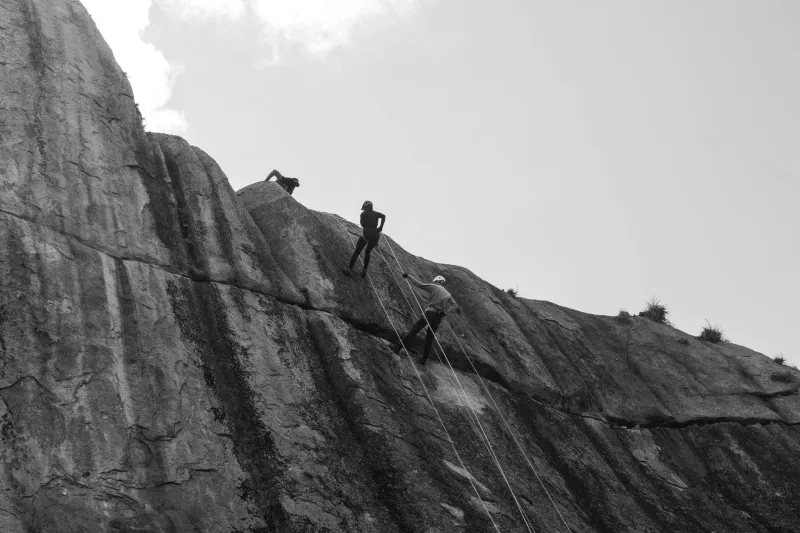
Mountaineers use the phrase weather window for a reason. It does not mean perfect conditions. It means a period in which the risk is understood, the route is viable and the team can move with purpose. The same discipline applies to strategic decisions that carry real cost and real consequence.
Uncertainty Is Not the Same as Indecision
A changing forecast can be a legitimate reason to pause. It can also become a comfortable language for avoiding a decision. The distinction matters. Genuine uncertainty has identifiable features: the variables are known but their direction is not, the range of outcomes is wide, and new evidence would materially change the decision. Indecision often looks similar from the outside, but its features are different. The goalposts move without new evidence. More analysis is requested without a decision rule. Meetings multiply while the cost of delay remains unowned.
UK boards and executive teams should name which condition they are in. If the forecast is genuinely unsettled, the task is to define what would constitute an adequate window. If the organisation is simply reluctant to commit, the task is to expose the cost of waiting and assign it to someone.
Define the Move Before You Read the Sky
A strategic move should be described in terms of commitment, not activity. Entering a new region, replacing a core platform, acquiring a capability, restructuring a operating model or making a significant capital investment all involve irreversible or expensive-to-reverse choices. Before debating the forecast, the leadership team should agree four things.
First, what exactly is being committed? A pilot is not the same as a national rollout. A partnership is not the same as an acquisition. Precision prevents the conversation from drifting into generalities.
Second, what would make the move worthwhile? This is not a business case written to secure approval. It is the small set of conditions that must hold for the move to make strategic sense: a demand threshold, a regulatory ruling, a funding cost, a capability milestone or a competitor response.
Third, what is the cost of delay? Some windows close slowly. Others close sharply. If waiting six months costs market position, key talent or option value, that cost belongs in the decision, not in a footnote.
Fourth, who decides? A gate without a named decision-maker becomes a review cycle. A review cycle without an expiry date becomes a waiting room.
Build a Window, Not a Waiting Room
The practical alternative to forecast-watching is a set of go/no-go gates that are agreed in advance and do not drift. A good gate has three qualities. It is observable, so the team can tell whether it has been met. It is time-bound, so the decision cannot roll forward indefinitely. And it is consequential, so a no-go triggers a genuine alternative rather than another round of analysis.
For a UK leadership team, that might mean setting a gate around the Bank of England's rate path, but only if the rate path genuinely changes the economics of the move. It might mean linking a gate to a policy consultation outcome, a customer-contract threshold or a regulatory approval. The point is not to predict the future. The point is to pre-commit to what evidence would justify action.
Gates should also include stop rules. If the window does not open by a specified date, the organisation will pursue a different route: a smaller version of the move, a partnership rather than a build, a delayed entry with a defined re-entry point, or a deliberate decision to stand down. A stop rule is not pessimism. It is what prevents a strategic ambition from becoming an indefinite programme of preparatory work.
The Discipline of Committing
Mountaineers do not commit because the forecast is perfect. They commit because the window is adequate, the team is ready and the alternative is worse. Business leaders often wait for a forecast that will never arrive. In 2026, with policy and demand signals still moving, the stronger discipline is to define the window, watch the few variables that matter and move when the conditions are good enough.
The final test is not whether the decision feels comfortable. It is whether the organisation has distinguished the weather from the wait. A clear window, a named decision and a pre-agreed stop rule will not remove uncertainty. They will prevent uncertainty from becoming an excuse.