The Plan Is a Col, Not a Peak: Planning for the Descent into Delivery

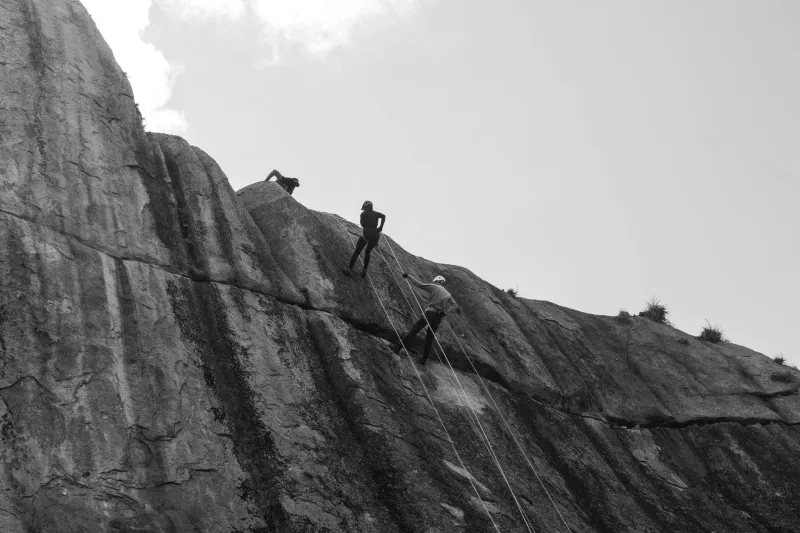
In mountaineering, the false summit is a cruel illusion. A high point looks like the top, invites premature celebration and hides the real summit behind it. Annual planning has its own false summit. After weeks of workshops, templates and board papers, the plan is signed off. The launch is held. The cascade begins. For many UK leadership teams in late 2026, this is the moment of maximum perceived altitude and minimum grip.
The plan is not the peak. It is a col: a pass between two climbs, exposed, where weather changes and the real work begins. Treating the sign-off as the summit creates a dangerous descent into delivery.
Summit fever in the planning cycle
Planning season rewards convergence. Teams are asked to agree, align and commit. The social pressure to present a united front is immense. By the time the plan reaches the board, ambiguity has been polished into confidence. That is not necessarily dishonesty; it is what groups do when they are tired and want closure.
The danger is not that the plan is wrong. All plans are wrong in some respect. The danger is that the team has spent its energy on ascent and has none for the descent. Delivery is the descent: less glamorous, more dangerous and where most accidents happen.
The descent problem
In the months after kickoff, the plan meets reality. First-quarter milestones slip. A supplier fails. A regulator moves. A key recruit goes elsewhere. The team that was aligned in December discovers it has no shared language for divergence. Because the plan was treated as a summit, any deviation feels like failure rather than information. So people protect the plan and hide the variance.
The result is a slow, silent drift: strategy execution by attrition. The plan remains formally intact while the organisation quietly routes around it. By the time the gap is acknowledged, the options are narrower and more expensive.
Traverse, not summit
A traverse mindset changes the question. Instead of asking how to reach the plan, ask how to move across the terrain. A traverse is a commitment to a line, with permission to adjust. It requires three disciplines: fewer priorities, clearer contingencies and a deliberate post-kickoff plan.
Fewer priorities, named trade-offs
Most annual plans contain too many priorities. A useful test is blunt: if everything is a priority, the organisation has no strategy. Limit the list to three or four. Then name what will not be done. Make the trade-offs explicit before delivery forces them in less controlled conditions.
This is harder than it sounds. UK leadership teams are often skilled at adding commitments and less skilled at removing them. A priority list without a stop-doing list is a wish list with a timetable.
Contingencies with triggers
A pre-mortem is more useful than an optimism review. Imagine it is twelve months from now and the plan has failed. What happened? Identify triggers, not just risks. A risk is a possibility; a trigger is a measurable condition that changes the plan. If recruitment is below a certain level by March, defer the second phase. If a regulatory decision slips beyond June, switch to the lower-cost route.
Contingency is not pessimism. It is route-finding. The teams that adapt best are not the ones that predicted everything; they are the ones that agreed in advance what would cause them to change course.
A deliberate plan for after kickoff
The launch event is not the end of planning. Schedule a ninety-day traverse review. This is not a standard quarterly business review. Ask three questions: what has changed in conditions, what are we learning, and what will we stop? Protect the first ninety days for adjustment, not just mobilisation.
In the UK, planning cycles vary between January and April starts, but the principle holds. The first quarter after launch is a distinct phase of the climb. It deserves its own plan, its own checkpoints and its own permission to revise.
The leader's role after sign-off
Leaders need to signal that the plan is a hypothesis, not a tablet of stone. Language matters. Refer to the plan we have rather than the plan. Reward the early surfacing of variance. Make it safe to say the route is wrong without implying that the strategy has failed.
This is not a call for perpetual replanning. It is a call for disciplined adaptation. The summit is not the signed document. The summit is a sustainable delivery capability, built by teams that know how to move together when the weather turns.
As UK leadership teams enter planning season, the temptation is to celebrate the sign-off. Resist it. The plan is a col. Pack for the descent. Build in the traverse. The real climb starts after the applause.