Fast and Light or Fixed Ropes: Choosing the Operating Model Your Team Needs
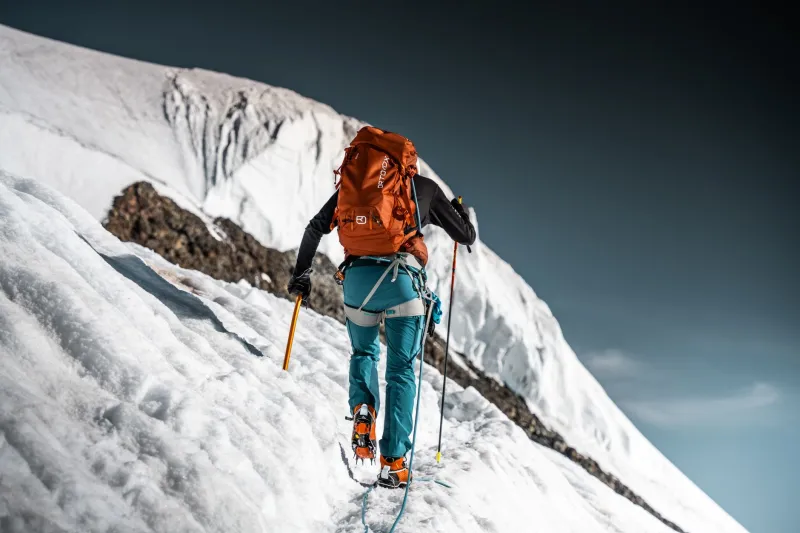
There are two familiar ways to climb a mountain. One is alpine style: a small team, light equipment, few external dependencies and rapid movement. The other is siege tactics: fixed ropes, staged camps, heavy logistics and a large support structure. Neither is inherently superior. The mistake is using the wrong one for the face in front of you.
UK leadership teams face the same choice constantly. A new product, a market entry, a turnaround, a regulatory response or a major transformation can be approached with a small, empowered team moving quickly, or with a large programme office, layered governance and extensive support functions. Too often, the organisation defaults to siege tactics because they feel safer. Sometimes they are. Often they are simply slower.
Two Ways Up the Same Face
Alpine style is not reckless. It is disciplined in a different way. The team is small enough to make decisions without escalation. The scope is tightly defined. Support is limited to what can be carried. Progress depends on speed, judgement and the ability to retreat without losing the expedition.
Siege tactics are not automatically bureaucratic. They are a response to conditions that demand endurance, coordination and redundancy. Fixed ropes allow a larger team to move safely across difficult ground. Staged camps allow supplies to be positioned. Heavy logistics allow a long campaign to be sustained.
In an operating model, the difference shows up in decision rights, team size, planning horizon, governance cadence and the amount of support work that surrounds the core effort. Alpine style pushes authority to the edge. Siege tactics centralise coordination. Alpine style tolerates ambiguity in service of speed. Siege tactics reduce ambiguity through process.
When Siege Tactics Earn Their Keep
Some problems genuinely require fixed ropes. Regulated industries with safety-critical change, complex mergers, multi-year infrastructure programmes and transformations that touch thousands of colleagues often need staged assurance, formal dependencies and significant coordination. If a mistake would be catastrophic or irreversible, the extra weight may be justified.
Siege tactics also make sense when the organisation must bring many stakeholders along. A UK public-sector programme, a heavily regulated financial-services change or a cross-border integration may need visible governance to maintain confidence. The operating model is not just how work gets done. It is also how legitimacy is maintained.
The warning signs appear when siege tactics are used by default. If every initiative requires a programme board, a detailed plan to the end state and a support army before the first meaningful test, the organisation is carrying expedition-weight logistics onto a route that rewards speed.
When Speed Matters More Than Certainty
Alpine style suits problems where learning is fast, the cost of a wrong turn is survivable and the main risk is being outpaced. Digital product development, customer-experience redesign, early market testing and response to a fast-moving competitor often fit this pattern. The team needs a clear objective, a small number of experienced people, tight feedback loops and the authority to adapt.
The common error is to apply siege tactics to a problem that needs speed. It looks like a steering committee waiting for a full business case before a two-week test. It looks like a dependency map with fifteen workstreams before anyone has spoken to a customer. It looks like a programme office measuring progress by documents produced rather than evidence gathered. The organisation feels in control, but the window is closing.
A Short Diagnostic
Before choosing the model, ask five questions.
First, how reversible is the move? If a wrong step can be corrected cheaply, lean alpine. If it cannot, consider siege.
Second, how much is genuinely unknown? If the main task is discovery, small teams with fast feedback are usually better. If the main task is coordinated execution across many functions, heavier structure may help.
Third, how many dependencies are external? A small number of critical dependencies can be managed by a light team. A dense web of regulatory, supplier and stakeholder dependencies may require fixed ropes.
Fourth, what is the cost of delay? If waiting for perfect coordination costs market position or learning, speed should carry more weight.
Fifth, does the team have the experience to move light? Alpine style depends on judgement. If the team lacks it, a heavier model may be the responsible choice until capability improves.
Switching Models Mid-Climb
Changing operating model is not an admission of failure. It is often the sign of a learning organisation. A discovery phase may begin alpine style and then shift to a heavier execution model once the route is known. A complex programme may start with siege-style assurance and then delegate delivery to smaller, faster teams.
The key is to make the switch deliberate. Name the trigger: a regulatory approval, a proven product-market fit, a funding decision or a capability milestone. Then change the governance, team size and support structure accordingly. What leadership teams should avoid is drift, where a light team quietly acquires heavy process or a heavy programme insists it is still moving fast.
The operating model is a strategic choice, not an administrative one. Choose the one the climb requires, not the one the organisation finds most familiar.