Rooms Without Rank: The Quiet Case for Bothies in Leadership Teams
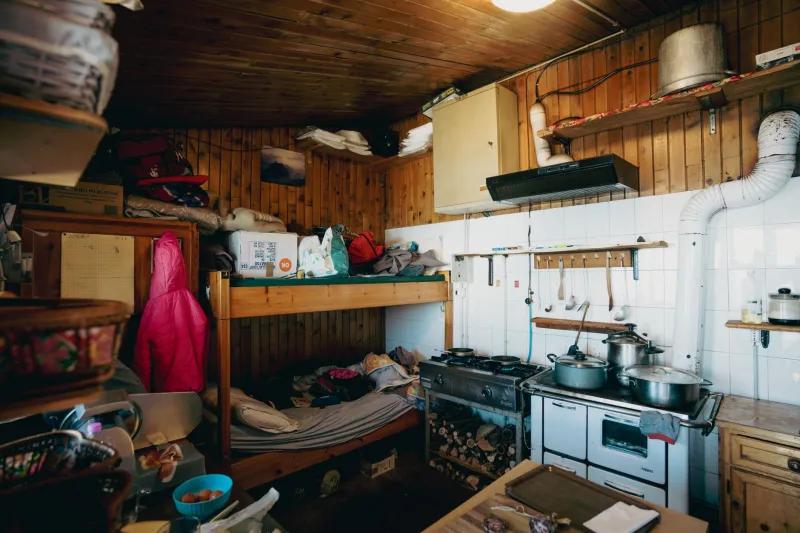
In the Scottish Highlands, a bothy is easy to miss: a low building, often stone, sometimes little more than a dry room with a bench and a stove. It has no reception, no booking system and no rank. Climbers arrive wet, share what fuel they have and speak plainly. The bothy is not a destination. It is a refuge.
Leadership teams have plenty of destinations: the annual offsite, the town hall, the strategy day with its flip charts and facilitated agreeables. What they often lack is shelter. Not comfort for its own sake, but a place where the conversation that has been avoided can be had before it becomes a crisis. The bothy principle is a corrective to the offsite industrial complex: less performance, more weather.
The cost of the unsaid
Bad news travels slowly in organisations. By the time it reaches a leadership team, it has been softened, formatted and given a slide. The issue is rarely cowardice. It is status. In most rooms, someone is more senior, more polished or more invested in the accepted story. To speak plainly is to risk looking disloyal, negative or operationally naive.
High-performing teams are not the ones that never have difficult conversations. They are the ones that have them early, cheaply and without theatre. The difference is design. Psychological safety is not a workshop output; it is a property of the room. If the only spaces available are formal, minuted and tied to decisions, candour will be rationed.
What a bothy is and is not
A bothy is not another meeting. It has no conventional agenda, no minutes and no action log that turns every honest sentence into a project. It is off-calendar. It is low-status: the chief executive carries fuel like everyone else. It is bounded: people arrive, dry out and leave. The bothy code is instructive. Leave it better than you found it. Share what you have. No one is served.
For a leadership team, the equivalent is a recurring space with minimal ceremony and maximum permission. It is not therapy, and it is not a substitute for governance. Poor behaviour still needs to be addressed. Shelter is not secrecy. But without such a space, the team relies on escalation as its only route to truth.
Design rules for shelter
Remove the table. Physical layout matters more than most leaders admit. Circles, no head, no screen. If the room looks like a board meeting, it will behave like one.
Separate shelter from decisions. If every candid remark becomes an action, people learn to keep quiet. Record themes, not attributions. Take the decisions elsewhere.
Set a light frame. One question is enough: where is the plan already under strain? What are we not saying about delivery? What would make this red by Friday? A single question, asked honestly, beats ten facilitated exercises.
Protect the calendar. Off-calendar means outside the performance cycle. Quarterly is usually enough. Weekly turns shelter into a ritual, and rituals become performances.
Model plain speech. Leaders should go first, with specifics rather than confessions. A useful opening is not a grand admission but a precise one: here is what I have been slow to say.
Close the loop quietly. If something changes because of what was said, say so without turning it into a committee. People need evidence that candour travels.
The bothy in practice
A UK leadership team might hold a shelter session every six weeks: ninety minutes, no slides, an external facilitator if the internal dynamics are poor, and a rotating location away from the head office. It should not be confused with a business review. The opening question is not about RAG status, which is often a social nicety, but about conditions. What is the actual weather in each function? Where are people carrying more than their share? What is being polished for this room?
The test of a bothy is not whether people enjoy it. It is whether the avoided conversation happens earlier. If a delivery risk surfaces in October rather than January, the shelter has worked. If the same issue arrives as a crisis, it has not.
The limits of refuge
A bothy is not a permanent home. Teams still need clear accountabilities, proper governance and the discipline of decision-making. Shelter without follow-through becomes another form of avoidance. The principle is a complement to execution, not an escape from it.
Nor should the space become a clique. If it is open only to the executive team, it may deepen the divide between the summit and the front line. The best versions connect upward and downward: leaders practise plain speech in the bothy, then make it safe for the same speech elsewhere.
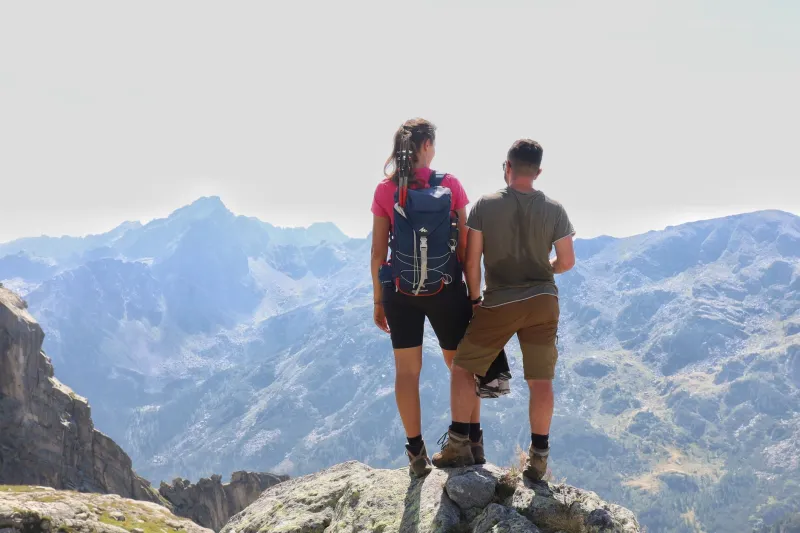
The next time a leadership team plans a strategy day, it might ask a smaller, more useful question: where will the avoided conversation happen? Build that shelter. A dry room and a plain word are often worth more than another facilitated ascent.