The Unminuted Room: Auditing the Decisions That Never Reach the Agenda
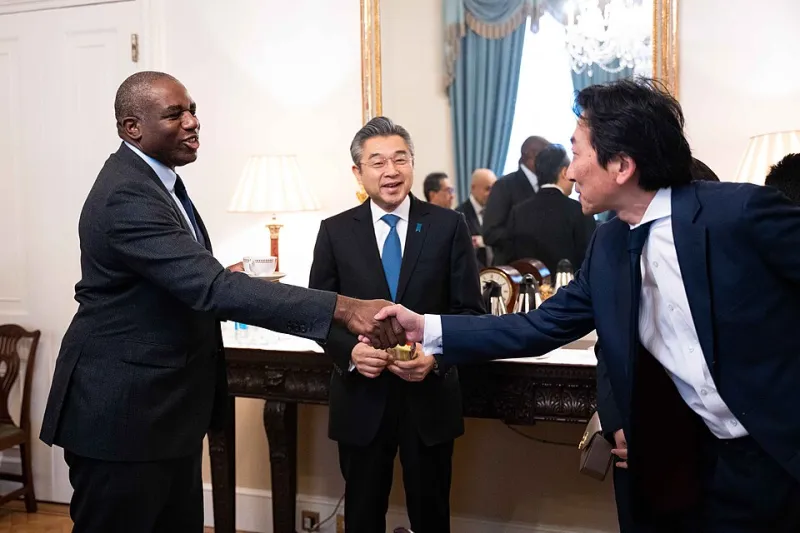
Photo: Foreign, Commonwealth & Development Office, CC BY 2.0, via Wikimedia Commons
Most leadership teams would recognise the formal architecture of their decision-making: the weekly executive meeting, the monthly board pack, the quarterly review, the annual plan. What they often fail to see is the second architecture—the pre-brief before the meeting, the debrief after it, the conversation by the lift, the call on the walk to the station. These are not necessarily subversive. They are how human beings make sense of complexity at speed. But they are also where strategy is often shaped, softened, reopened or quietly vetoed. If leaders want strategic clarity, they need a way to see that unminuted room without turning it into a surveillance exercise.
The meeting is the visible tip
Agendas, minutes and action logs create an impression of completeness. They record what was discussed, what was agreed and who was tasked. But the formal meeting is often a ratification point rather than a decision point. By the time an item reaches the table, it may already have been pre-briefed with three of the five people who matter, softened by a private conversation, or reframed to avoid a predictable objection. After the meeting ends, the real work of interpretation begins: what did we actually agree? Who needs to hear what? Which caveats were left out of the minute?
None of this is inherently unhealthy. Corridor conversations can be fast, candid and generous. They can resolve ambiguity that a crowded agenda cannot. The difficulty arises when the informal channel becomes the primary channel, and the formal meeting becomes theatre. At that point, commitments made in passing may never reach the plan. Contradictions may be tolerated because no one has surfaced them in the same room. A quiet veto—the well-placed “are we sure?”—can look like consensus because the minute records only the outcome, not the erosion.
The problem is invisibility, not informality
It is tempting to respond by trying to eliminate the informal. That would be a mistake. Collegiality is an asset. The quick word in the corridor can prevent a misunderstanding from hardening into a dispute. The pre-brief can help a quieter colleague prepare to contribute. The post-meeting debrief can turn a messy discussion into a workable next step.
The issue is not that these conversations happen. The issue is that they are invisible to the people who are accountable for the strategy. A chief executive may believe the team has decided one thing; the team may believe it has decided another; the organisation may be acting on a third. That gap is not necessarily the product of bad faith. It is the natural consequence of a decision architecture that has never been mapped.
A light-touch audit: tracing decision provenance
The most useful question is not “who said what in the corridor?” It is “where did this decision actually come from?” Decision provenance—the trail of how a choice became real—can be audited without recording individuals or policing conversation. The approach is deliberately modest. Select a small sample of recent strategic decisions: a pricing change, a hiring freeze, a shift in operating model, a pause on a project. Then ask four questions.
First, where did the decision first become a serious possibility? Second, where was it shaped—what conversation, meeting or exchange changed its direction? Third, where was it confirmed? Fourth, where was it reopened? The answers will not always be flattering, but they will be instructive. A decision that is first raised in a formal meeting, shaped in a pre-brief, confirmed in the meeting and reopened in the car park is not necessarily a bad decision. But the team should know that is how it happened.
Five prompts for leadership teams
To make the invisible architecture visible, leaders can begin with a short set of prompts, used in a dedicated session rather than as an ongoing interrogation.
-
What was settled before the meeting began? This surfaces the pre-brief and the private alignment that may have narrowed the options available at the table.
-
What was reopened after the meeting ended? This reveals the post-meeting debrief that may have softened, reinterpreted or undermined the formal decision.
-
Which commitments were made in passing and never logged? This catches the small promises that accumulate into an unofficial plan.
-
Where is the quiet veto most likely to be exercised? This identifies the person, relationship or ritual that can stop a decision without appearing to.
-
Who is systematically outside the corridor? This asks whether the informal channel is also an exclusion channel—and what that means for diversity of thought and execution.
Designing the audit without turning it into surveillance
The credibility of this work depends on its boundaries. The audit should be voluntary, aggregate and non-attributable. It should focus on decisions, not individuals. It should run for a short, defined period—two weeks is often enough—and the findings should be shared with the whole team, not held by the leader as intelligence. The language matters: this is not a culture review, a compliance exercise or a test of loyalty. It is a practical attempt to see how the team actually works.
A simple method is a decision provenance log. Team members note, without names, where a strategic decision moved: pre-brief, meeting, debrief, corridor, digital channel. The log does not capture content or commentary. It captures pattern. Over two weeks, the pattern will show whether the formal meeting is the decision point or the announcement point, and whether the informal channel is a source of speed or a source of drift.
What good looks like
The aim is not to ban the corridor conversation. It is to make it legible. A mature team can say: this decision was shaped in a pre-brief; here is what changed; here is who was not in the room; here is why that was acceptable—or not. That is not an admission of weakness. It is evidence of strategic clarity.
The unminuted room will always exist. Leaders who pretend otherwise are simply choosing not to look. Leaders who look—carefully, lightly and without turning colleagues into suspects—give themselves a better chance of catching the quiet veto, the unlogged commitment and the contradiction before it hardens into the official plan.