Between Two High Routes: Choosing a Strategic Path You Cannot Prove in Advance
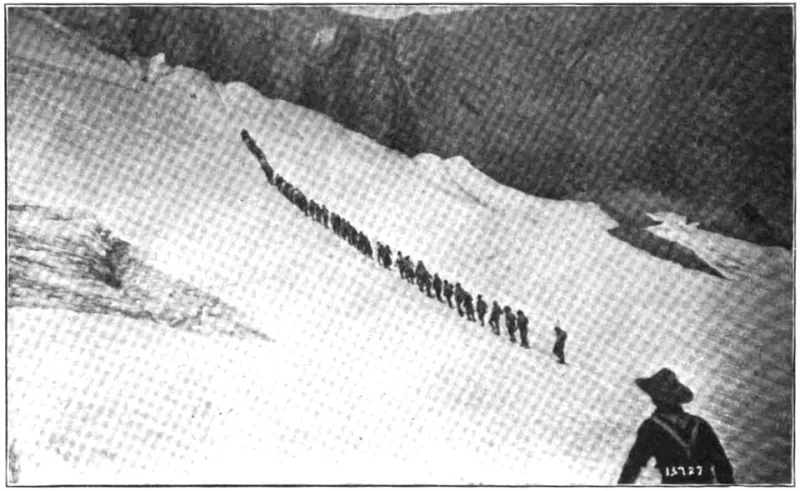
Photo: Unknown author, Public domain, via Wikimedia Commons
Every so often a leadership team arrives at a fork that resists resolution. Deepen in the sector where the firm already has a reputation, or broaden into an adjacent market while the appetite is there. Grow organically and slowly, or acquire and accept the integration risk. Hold the premium position, or move down into volume before a competitor does. Two credible routes, two well-argued papers, and no piece of evidence that will settle the matter before the decision must be taken.
The instinct in these moments is to commission more analysis, or to wait for conditions to clarify. Both instincts are usually expensive. Conditions rarely clarify on the timetable of an annual plan, and further analysis tends to produce a third paper of equal polish rather than a decision.
Why the Saddle, and Not the Summit
A saddle is the lowest point on the ridge between two peaks. It is not a destination; it is a place of passage. From a saddle the beginnings of both routes are visible, but neither can be seen in full — the upper slopes, the rock steps and the weather beyond the skyline remain hidden until you are on them.
That is an accurate description of most genuine strategic forks. The question is not which summit is objectively superior, because that cannot be known from where the team is standing. The useful question is which route the organisation is better equipped to travel, given its capabilities, its appetite for risk and the conditions it expects.
Separate the Criteria from the Case
The most common failure is procedural rather than analytical. Two internal sponsors build competing cases. By the time the papers reach the board, the discussion is advocacy rather than appraisal, and the team with the stronger presenter wins rather than the stronger logic.
The corrective is to agree the criteria before either case is written. Put them in writing, with relative weights, and include the ones that make the room uncomfortable: what would have to be true for this route to fail; what would it cost to exit; how much leadership attention will it consume over the next eighteen months; and what does it commit us to beyond the planning horizon?
Test Reversibility Before You Test Return
Most strategic routes contain both reversible and irreversible consequences, and the distinction matters more than the spread of forecast returns. A market entry can usually be wound down. A reputation with a particular customer segment, the trust of a key hire, a capital structure, a regulatory approval or a cultural promise made to staff often cannot.
Ask of each route: if we are wrong, what can be recovered, at what cost and how quickly? A route with a modestly lower expected return but a clean exit may be the better choice in an uncertain year — not because caution is admirable, but because optionality has value that business cases rarely price.
Price the Irreversible
Some costs never appear in the spreadsheet: the attention the route will absorb, the options it forecloses, the signal it sends to customers and employees about what the organisation now is. There is also the second-order effect that UK scale-ups tend to discover late — the talent a route attracts and the talent it quietly loses. A strategy that requires a kind of person the firm cannot recruit is not a strategy; it is a wish.
Decide How the Decision Will Be Made
Before debating content, agree the process. Who decides — the chief executive alone, the executive team collectively, or the board? On what basis? By what date? And what would justify reopening the question?
Name three or four observable triggers in advance. A defined loss of market share, a regulatory change, the failure of a pilot to reach a threshold. Doing this turns a later change of course into a planned act rather than a U-turn, and it protects the team from the sunk-cost gravity that makes reversal feel like admission.
Record the reasoning, including the arguments that lost and why. A decision record that captures only the winning case cannot teach anyone anything, and it leaves the organisation vulnerable to rewriting its own history once the outcome is known.
Commit Without Pretending
Commitment is not certainty, and mature teams do not confuse the two. The best available standard is legibility: we chose this route because of these criteria; we accept these risks explicitly; we will review at these points; and we know what would cause us to stop.
Saying the risks aloud at the moment of commitment is not a weakening of resolve. It is what keeps dissent available later, when the evidence begins to accumulate and the team needs permission to notice it.
The Saddle Is Not the Destination
The point of a saddle is passage. Teams that linger there — one more piece of analysis, one more round of customer interviews, one more quarter — pay a price in momentum and in the confidence of everyone waiting for a decision. The climb on either side begins with a single, deliberate step away from the low ground.